Browse Items (88 total)

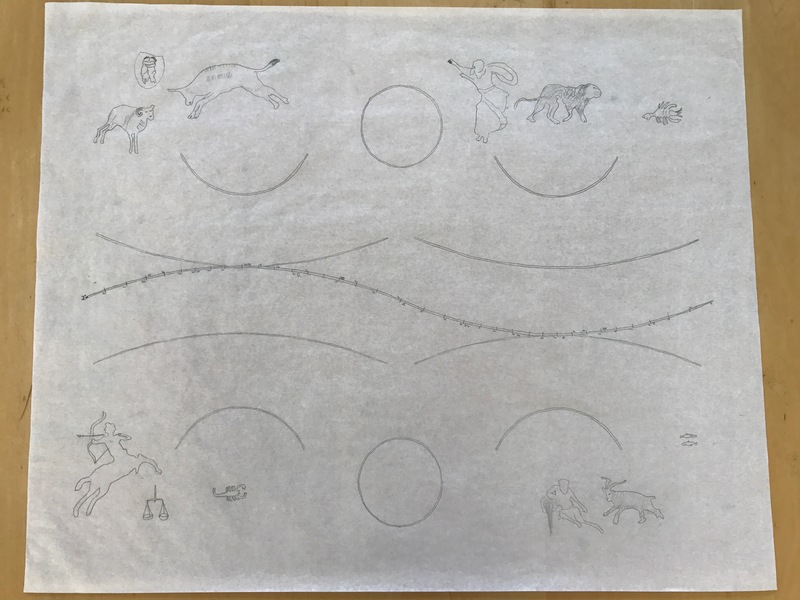
The final layer of the map I included was the interpretations of the zodiac glyphs that surround the spheres. The twelve signs of the zodiac are divided among the four corners of the map. The upper left features Aries (the ram), Taurus (the bull),…
In some ways, this layer is least important visually, but it also holds a key to my map's purpose and the interesting way that it blends genres. This layer contains a couple of graphic design elements—compass rose and arrows indicating the river…
Layer1.JPG
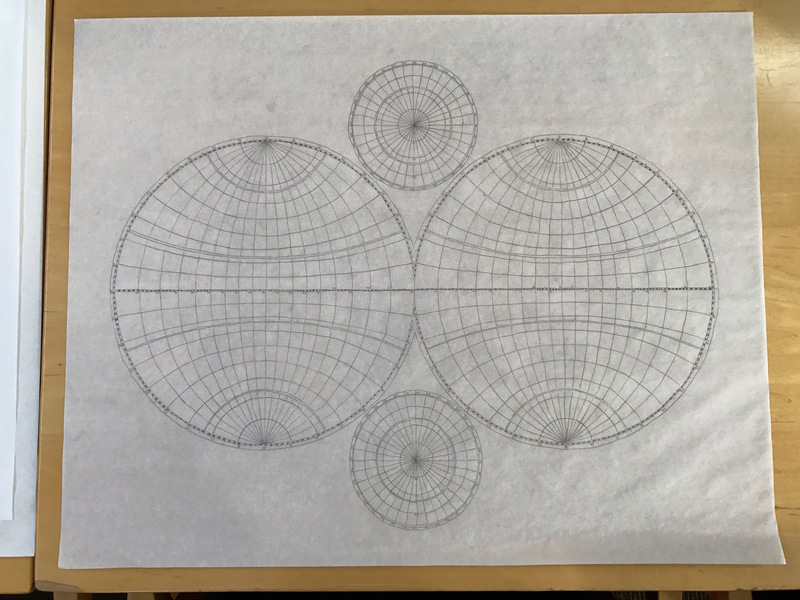
This layer shows the latitude and longitude lines in all four panels of the map (the two hemispheres and the two poles). Included are the latitude and longitude degrees, with the equator clearly demarcated. As a world map, relative sizes and…
Layer2.JPG
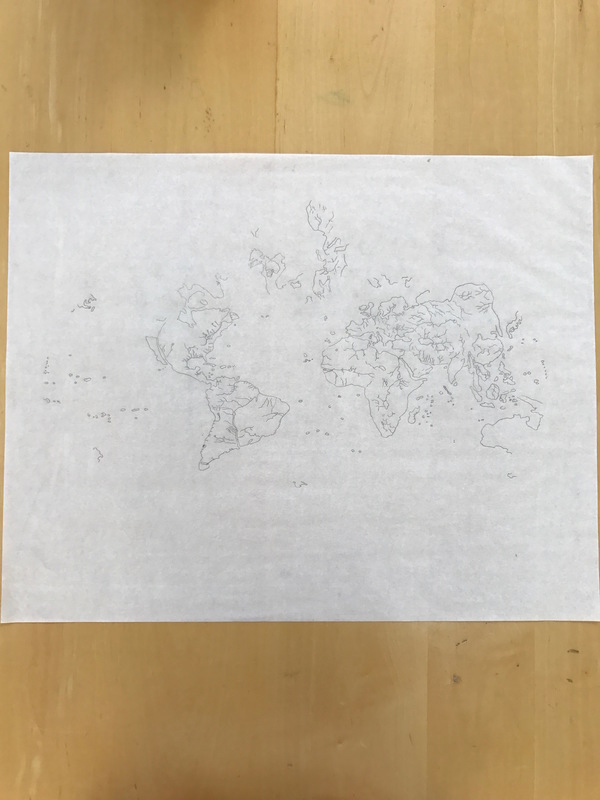
This layer shows the lines on the map corresponding to boundaries between land and water. This includes continental borders, seas, lakes, islands, and rivers. As this is a world map, including a layer for the continents and oceans was essential, yet…
Layer3.JPG
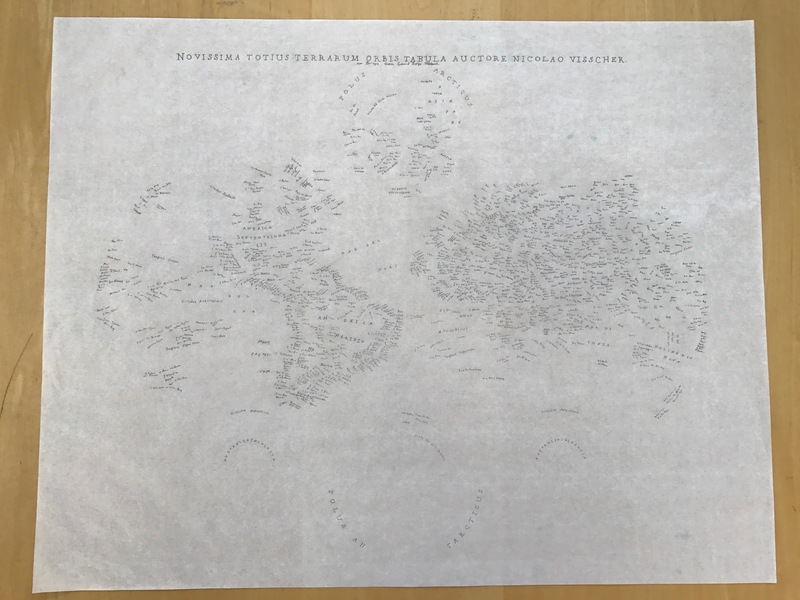
The purpose of the text serves to help the viewer identify countries, cities, or river names. This map was likely used more for artistic purposes rather than traveling purposes, so having the text in Latin allowed for ease in translation to other…
Layer4.JPG
This map not only serves as a spatial frame of reference, but also as a temporal frame of reference. The ecliptic, showing the path that the sun follows over the course of a year, is annotated with zodiac symbols and days of the month. Additionally,…
This layer includes tracings of labels, composed of text and black box markers, on the map. Although I cannot read Japanese, I believe these labels are significant because they label minute details on the map. I struggled with tracing a lot of the…
This layer only includes the outline and lines found on the map. I viewed this layer a skeleton of the map, representing the geometric theme used for forms that are not landmasses or illustrations. I placed this as the fourth layer so that it…
Description: Green-blue colored mountains can be seen in almost all continents of the map except for Japan and South America.

Significance: Geographic features, primarily of mountainous regions give an image of how Japanese thought about natural…
Description: Red bodies of water, 「西紅海」「東紅海」can be seen to the right of Libya and running down North America out into the Pacific Sea (which is not shown on the map), respectively. 「西南海」(Southwest Sea)「大南海」(Big South Sea)「東南海」(Southeast Sea) are all…
Output Formats

atom, dcmes-xml, json, omeka-xml, rss2